


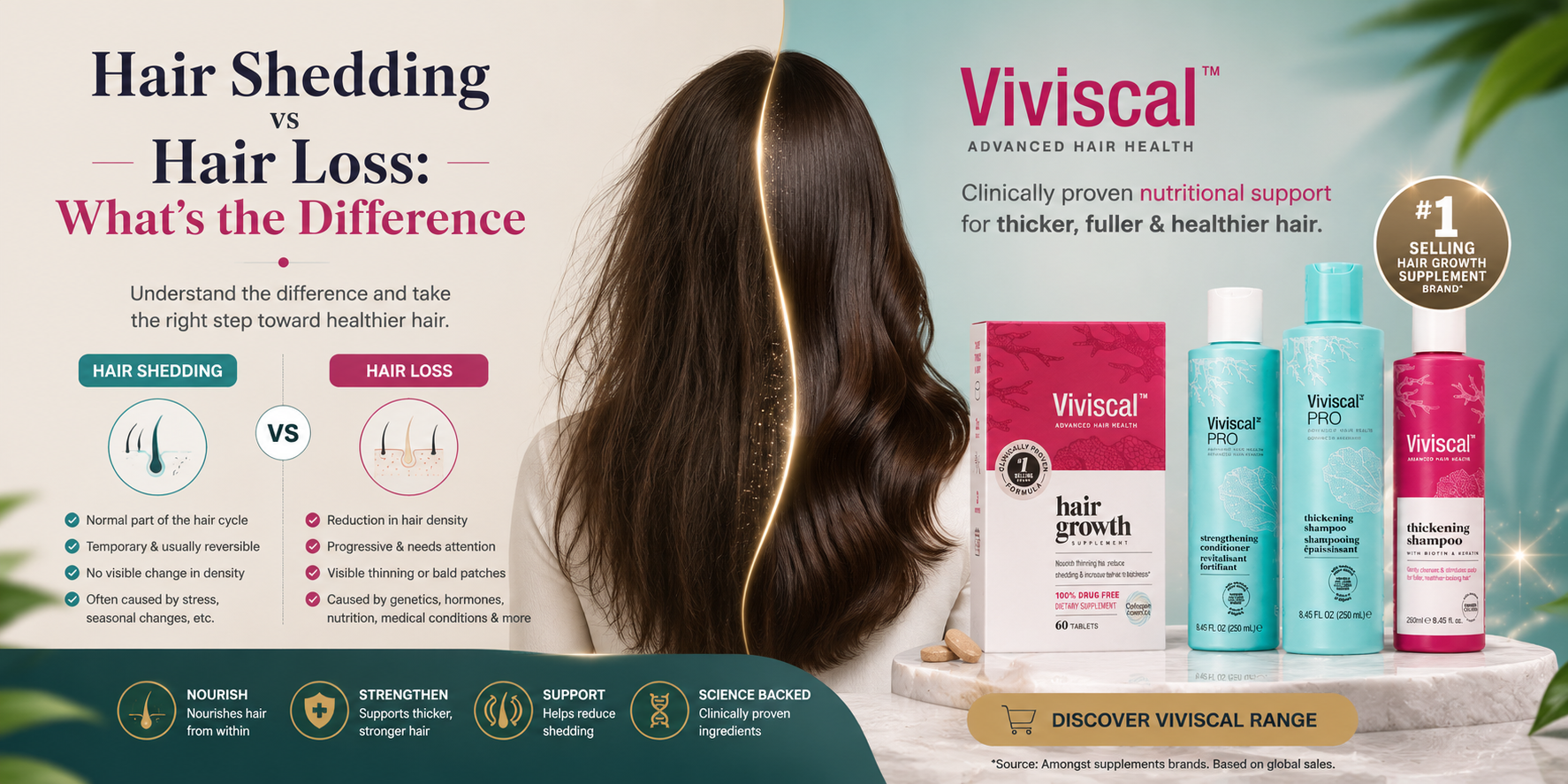
Hair Shedding vs Hair Loss: What’s the Difference?
Seeing hair on your brush, pillow or in the shower can be worrying. But some daily hair shedding is normal and doesn’t necessarily mean you’re experiencing hair loss.
The key difference is whether your overall hair density is changing over time.
According to the American Academy of Dermatology (AAD), losing around 50 to 100 hairs a day can be normal as part of the natural hair-growth cycle. The amount can vary between individuals, so the number of hairs you notice isn’t the only way to determine whether something is wrong.
Hair shedding is a normal part of the hair-growth cycle, while hair loss generally refers to noticeable thinning, reduced density or loss of hair.
Hair Shedding vs Hair Loss: The Quick Difference
| Hair Shedding | Hair Loss |
| Normal part of the hair-growth cycle | Noticeable reduction in hair density or growth |
| Individual hairs naturally fall out | Hair may become progressively thinner |
| Usually doesn’t noticeably change overall density | May cause increased scalp visibility |
| Can occur as part of normal hair cycling | May require evaluation to identify the cause |
| Loose hairs may be noticed during washing or brushing | May appear as thinning, patches or changes in the hairline |
In simple terms: shedding is part of the normal hair cycle; hair loss is a noticeable change in the amount or density of hair.
What Is Normal Hair Shedding?
Hair goes through different stages during its natural growth cycle. Some hairs eventually reach the shedding stage and fall out, making room for new hairs to grow.
You may notice naturally shed hair:
- In your hairbrush
- In the shower
- On your pillow
- On your clothes
- Around your home
This doesn’t necessarily indicate a problem.
The amount of shedding can also appear different depending on how often you wash or brush your hair. Someone who washes their hair less frequently may notice more loose hairs on wash day simply because several days of naturally shed hair are being removed at once.
The important thing is to look for changes over time rather than focusing on individual hairs.
What Is Hair Loss?
Hair loss means a noticeable reduction in hair density or growth.
Unlike normal shedding, hair loss may become visible as changes to the way your hair looks or feels.
Common signs can include:
A Wider Part
If your part appears progressively wider, it may indicate a change in hair density.
A Thinner Ponytail
A ponytail that gradually feels smaller or thinner can be another sign of reduced hair density.
Increased Scalp Visibility
If you can see more of your scalp than before, particularly around the crown or parting, it may be worth investigating.
A Changing Hairline
A receding or noticeably changing hairline can be a sign of certain types of hair loss.
Bald or Thinning Patches
Distinct patches where hair has disappeared are different from ordinary daily shedding and should be professionally assessed.
The AAD recommends paying attention to changes such as thinning, bald spots and changes to the hairline.
What Causes Excessive Hair Shedding?
Temporary increases in hair shedding can occur for several reasons.
Potential triggers include:
- Significant physical or emotional stress
- Illness or recovery from illness
- Surgery or other major physical events
- Major changes in diet
- Rapid weight loss
- Hormonal changes
- Certain medications
- Nutritional deficiencies
Stress-related or event-related shedding can sometimes appear weeks or months after the triggering event, rather than immediately.
Because hair shedding can have multiple causes, it’s better not to assume that one particular factor is responsible without appropriate evaluation.
What Can Cause Hair Loss?
Hair loss has many possible causes, and identifying the cause is important when deciding what approach may be appropriate.
Genetic Factors
Hereditary or pattern hair loss is one of the most common causes of hair loss.
Hormonal Changes
Changes in hormones can influence the hair-growth cycle and may contribute to hair thinning or shedding.
Nutritional Factors
Inadequate intake of certain nutrients can sometimes contribute to hair changes. A balanced diet containing adequate protein and a variety of nutrient-rich foods is important for overall health.
Medical Conditions
Certain illnesses and medical conditions can affect hair growth.
Medications
Some medications may be associated with hair shedding or hair loss as a side effect.
Hair-Care Practices
Frequent chemical treatments, excessive heat or hairstyles that repeatedly pull on the hair can contribute to hair damage and, in some cases, hair loss.
Because the causes can be very different, treating the symptom without understanding the cause isn’t always the best approach.
How Can You Tell If You’re Shedding or Losing Hair?
One of the most useful things to monitor is your overall hair density.
Signs that may be normal shedding:
- You occasionally find loose hairs
- You notice shedding during washing or brushing
- Your overall hair density looks unchanged
- Your part and hairline look consistent
Signs that may indicate hair loss:
- Your part is becoming wider
- Your ponytail feels noticeably thinner
- Your hairline is changing
- You can see more scalp than previously
- You develop bald or noticeably thinning patches
- Hair density appears to be decreasing over time
The number of hairs you see in your brush alone isn’t enough to determine whether you have hair loss.
Does Washing Your Hair Cause Hair Loss?
Washing your hair does not automatically cause hair loss.
You may simply notice more loose hairs in the shower because hairs that had already entered the shedding stage are being removed during washing.
If you wash your hair less frequently, you may notice a larger amount of shed hair on wash day.
Rather than judging your hair health based on a single shower, pay attention to long-term changes in density, thickness and your hairline.
Can Stress Cause Hair Shedding?
Significant physical or emotional stress can be associated with increased hair shedding in some people.
This can happen after events such as:
- Major illness
- Significant emotional stress
- Surgery
- Rapid weight loss
- Other major physical stressors
The increased shedding may not happen immediately after the event.
If excessive shedding continues or you’re concerned about changes in your hair, speaking with a qualified healthcare professional can help determine the possible cause.
Can Nutrition Support Healthy Hair?
Your hair requires adequate nutrition as part of normal growth and maintenance.
A balanced diet should include a variety of nutrient-rich foods, including sources of:
- Protein
- Fruits and vegetables
- Whole grains
- Healthy fats
- Vitamins and minerals
Nutritional deficiencies can sometimes contribute to hair changes. However, taking supplements without knowing whether you have a deficiency isn’t necessarily appropriate.
If you suspect your diet may be contributing to a hair concern, a healthcare professional can help determine whether nutritional testing or dietary changes may be appropriate.
Can Hair Supplements Support Hair Wellness?
For people interested in nutritional support as part of a broader hair wellness routine, supplements can provide selected nutrients and other ingredients.
Viviscal is a hair wellness supplement range available through Vivandi. It can be considered as part of a broader approach that includes balanced nutrition and appropriate hair care.
However, hair supplements aren’t a universal solution for hair loss. Their relevance depends on an individual’s nutritional needs and the underlying cause of their hair concern.
If you’re experiencing sudden, severe or persistent hair loss, or developing bald patches, speak with a qualified healthcare professional before relying on supplements.
When Should You Be Concerned About Hair Shedding?
Occasional shedding is normal. However, it may be worth seeking professional advice if you notice:
- Sudden or rapid hair loss
- Persistent excessive shedding
- Significant thinning
- A rapidly widening part
- A changing or receding hairline
- Bald patches
- Scalp pain, redness or significant irritation
- Hair loss accompanied by other unexplained symptoms
Getting the cause identified can be more useful than simply trying different hair products or supplements.
Simple Ways to Support Healthy Hair
While the right approach depends on the cause of your hair concerns, some general habits can support healthy-looking hair:
Eat a Balanced Diet
Make sure your diet provides adequate protein and a variety of nutrient-rich foods.
Handle Hair Gently
Avoid aggressive brushing and excessive pulling, particularly when hair is wet.
Limit Excessive Heat
Frequent high-temperature styling can contribute to hair damage.
Avoid Constantly Tight Hairstyles
Repeated tension on the hair can contribute to breakage and certain types of hair loss.
Look After Your Scalp
Persistent itching, irritation, scaling or other scalp changes shouldn’t be ignored.
Pay Attention to Changes
Rather than worrying about individual shed hairs, monitor changes in your hair density, part, hairline and overall appearance.
Hair Shedding vs Hair Loss: What Should You Remember?
The simplest way to remember the difference is:
Hair shedding is a normal part of the hair-growth cycle. Hair loss involves noticeable thinning, reduced density or loss of hair.
Finding some hair in your brush or shower doesn’t necessarily mean you’re losing your hair.
Instead, look for persistent or noticeable changes over time.
A widening part, thinner ponytail, increased scalp visibility, changing hairline or bald patches may warrant professional evaluation.
A balanced diet, appropriate hair care and overall wellness can all form part of a healthy hair routine. If you’re considering nutritional support, products such as Viviscal can be explored as part of a broader hair wellness approach, rather than as a substitute for identifying an underlying cause.
Frequently Asked Questions
What is the difference between hair shedding and hair loss?
Hair shedding is a normal part of the hair-growth cycle, while hair loss generally refers to noticeable thinning, reduced density or loss of hair.
How much hair shedding is normal?
The American Academy of Dermatology states that losing around 50 to 100 hairs per day can be normal, although the amount varies between individuals.
What causes excessive hair shedding?
Excessive shedding can have several possible causes, including significant stress, illness, hormonal changes, rapid weight loss, nutritional deficiencies and certain medications.
Can hair supplements help with hair loss?
Hair supplements aren’t a universal treatment for hair loss. Their usefulness depends on factors such as nutritional status and the underlying cause of the hair concern.
Looking to Expand Hair & Wellness Products in the UAE?
If you’re looking to bring hair, beauty or wellness products into the UAE market, connect with Vivandi to explore opportunities for distribution and market growth.