


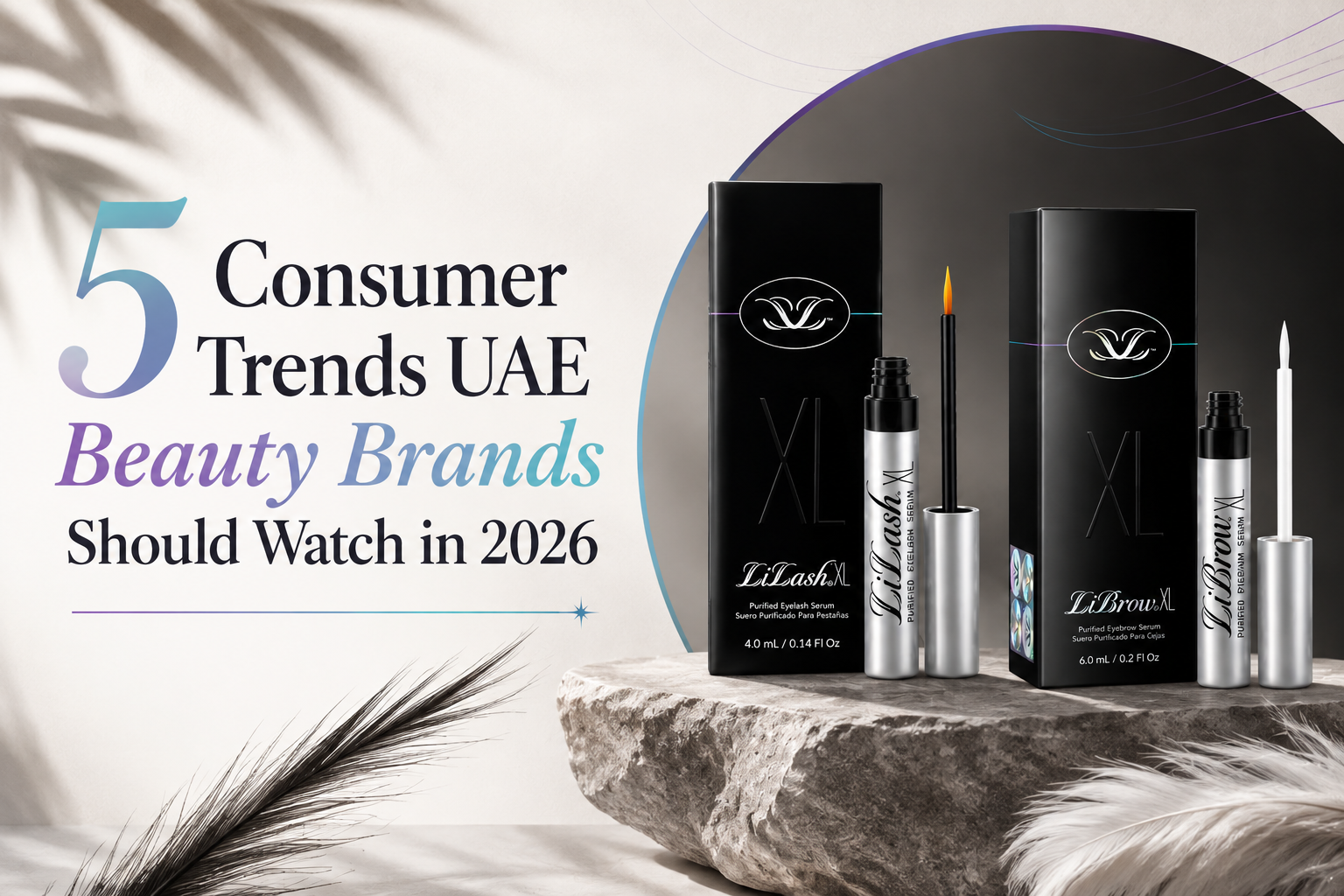
5 Consumer Trends UAE Beauty Brands Should Watch in 2026
The UAE beauty market is evolving rapidly, and beauty brands are adapting to a new generation of informed, digitally connected consumers. Shoppers are increasingly researching ingredients, comparing products, looking for credible information, and discovering new products through social media and online platforms.
For beauty brands looking to grow in the UAE, understanding these changing expectations can help shape better products, marketing strategies, and customer experiences.
Here are five key consumer trends that beauty brands should watch in 2026.
1. Consumers Want Proven Results, Not Just Promises
Today’s beauty consumers are becoming more conscious about what they put on and in their bodies. Instead of relying solely on attractive packaging or broad marketing claims, shoppers are increasingly interested in ingredients, product benefits, research, and evidence.
This shift is particularly important for beauty brands operating in competitive categories such as skincare, haircare, supplements, and personal care.
Brands can build greater trust by providing clear information about:
- Key ingredients and their purpose
- Product benefits and intended use
- Clinical studies or testing where applicable
- How and when to use the product
- Realistic expectations from consistent use
Educational content can also play an important role. Ingredient guides, FAQs, expert insights, product explainers, and informative blog content can help consumers make more confident purchasing decisions.
What this means for beauty brands: Focus on explaining why your product is different and how it fits into the consumer’s routine rather than relying only on promotional messaging.
2. Social Media Is Influencing Beauty Purchases
Social media is no longer just a platform for brand awareness. It has become an important part of the beauty discovery and purchasing journey.
Consumers can discover a product through a TikTok video, Instagram Reel, influencer recommendation, tutorial, or customer review and then immediately search for more information about the product.
For beauty brands, this means social content needs to do more than showcase attractive products. It should answer the questions consumers have before purchasing.
Effective content can include:
- Product demonstrations
- Before-and-after content where appropriate and substantiated
- Tutorials and how-to videos
- Ingredient education
- Expert-led content
- Customer experiences and reviews
- Comparisons between different product types
A consistent connection between social content, product pages, and educational resources can make the overall customer journey easier.
3. Personalised Beauty Experiences Are Growing
Consumers increasingly expect products and recommendations to reflect their individual needs.
The UAE is a particularly diverse market, with consumers having different lifestyles, beauty routines, hair types, skin concerns, and preferences. This creates an opportunity for beauty brands to move away from one-size-fits-all communication.
Personalisation does not necessarily mean creating a separate product for every customer. Brands can introduce personalised experiences through:
- Product recommendation tools
- Beauty quizzes
- Routine builders
- Personalised product collections
- Educational guides
- Targeted content
For example, rather than simply promoting a shampoo, a brand can help consumers understand which type of product may be suitable for their specific hair-care needs.
This approach can make product discovery more relevant while helping consumers navigate increasingly crowded beauty categories.
4. Beauty and Wellness Are Becoming More Connected
The boundaries between beauty and wellness continue to become less distinct. Consumers are increasingly interested in approaches that support their overall wellbeing rather than focusing only on external appearance.
This trend is particularly relevant to categories such as hair health, nutrition, supplements, skincare, and personal care.
For beauty brands, this creates an opportunity to become part of a consumer’s wider self-care routine.
For example, a hair-health brand could provide educational information around hair-care routines, scalp care, nutrition, and daily habits alongside its products. However, all health-related claims should be accurate, appropriately supported, and compliant with applicable regulations.
The opportunity is to move from simply selling a product to helping consumers understand how that product fits into their routine.
5. Consumers Want Premium Value, Not Just Premium Pricing
The UAE has a strong market for premium beauty products, but consumers are becoming increasingly selective about what makes a product worth its price.
Premium packaging and branding can attract attention, but long-term purchase decisions often depend on the overall value consumers perceive.
For beauty brands, premium positioning can be strengthened through:
- High-quality formulations
- Clearly communicated product benefits
- Strong product performance
- Ingredient transparency
- Scientific credibility where applicable
- Positive customer experiences
- Convenient purchasing options
- Reviews and other forms of social proof
The key is to communicate what makes the product worth choosing, rather than simply presenting it as a premium product.
What Do These Trends Mean for Beauty Brands in the UAE?
The UAE beauty market is becoming increasingly competitive, while consumers are becoming more informed about the products they purchase.
The five trends can be summarised simply:
| Consumer Trend | What It Means for Brands |
| Demand for proven results | Communicate evidence, ingredients, and benefits clearly |
| Social commerce | Create useful, educational, and engaging social content |
| Personalisation | Help consumers find products suited to their needs |
| Beauty + wellness | Position products within relevant self-care routines |
| Premium value | Clearly communicate why the product is worth choosing |
For beauty brands, the opportunity is not simply to follow every emerging trend. It is to understand which consumer expectations are relevant to the brand and build a strategy around them.
Brands entering or expanding in the UAE should consider the complete customer journey—from product discovery and education to purchasing and ongoing engagement.
How Beauty Brands Can Prepare for the UAE Market
A successful UAE market strategy requires more than simply introducing a product. Brands need to understand their target audience, identify relevant market opportunities, communicate their value clearly, and ensure consumers can easily discover and access their products.
Building a strong digital presence, creating educational content, understanding consumer behaviour, and maintaining consistent brand communication can help create a stronger foundation for long-term growth.
Ready to Explore Opportunities in the UAE?
The UAE continues to create opportunities for brands across beauty, wellness, personal care, and consumer health categories.
If you’re looking to expand your brand in the UAE, connect with Vivandi to discuss your brand and explore opportunities to grow your presence in the market.
Conclusion
The UAE beauty market in 2026 will be shaped by consumers who are more informed, digitally connected, and selective about the products they choose.
From demand for proven results and personalised experiences to the growing influence of social media, wellness, and value-driven premium products, these trends are changing how consumers discover and evaluate beauty products.
For beauty brands, understanding these shifts can help create more relevant products, stronger communication, and better customer experiences.
The brands that combine consumer understanding, credible product communication, and a strong market strategy will be better positioned to build sustainable growth in the UAE.