
Distributor of Beauty and Wellness Brands in the UAE: How to Choose One
The UAE health and wellness market was valued at USD 19.8 billion in 2025, according to IMARC Group, which forecasts USD 28.2 billion by 2034 (source). For international brands, entering this market usually means working with a local distributor of beauty and wellness brands that can handle registration, retail access and Arabic-English content.
This guide explains what an authorised distributor does, what to check before signing, and how to avoid the mistakes that stall launches.
What an Authorised Distributor Does
An authorised distributor holds written permission from a brand owner to import, market and sell its products in an agreed territory. In practice, a good distributor handles:
- Product registration and regulatory paperwork
- Import, customs clearance, warehousing and logistics
- Sales across retail, pharmacy, B2B and online channels
- Marketplace and website content, pricing and promotions
- After-sales support and brand protection
Authorised distribution also protects the end customer, because wellness products reach them genuine, correctly stored and compliant with UAE requirements.
Why Wellness Brands Need a Local Distributor
Wellness is a trust-led category. Shoppers look closely at ingredients, authenticity and brand reputation, and buyers at pharmacies, clinics and marketplaces want proof that a product is officially supplied. A local partner gives you:
- Compliance know-how: navigating the relevant authorities and labelling rules
- Channel access: existing relationships with retailers, pharmacies and platforms
- Local content: Arabic and English listings that match how people search
- Speed: a faster, lower-risk launch than setting up your own entity
How to Choose a Wellness Distribution Partner
1. Check Their Regulatory Track Record
Ask which authorities they have registered products with and how long it typically takes. Depending on product type (supplements, cosmetics, personal care) and emirate, relevant bodies can include MOHAP, Dubai Municipality, ADAFSA and MoIAT. Requirements change, so ask the distributor how they stay current, and confirm key details independently.
2. Look at Channel Reach
Ask where they actually sell: marketplaces such as Amazon.ae, Noon and Trendyol, specialist B2B platforms, pharmacies, clinics, gyms and their own e-commerce. A distributor strong in the channels your customers use will outperform one with a bigger warehouse but weaker reach.
3. Assess Their Digital Capability
Modern distribution is also a digital growth job. Ask who manages listings, SEO, A+ content, reviews and advertising, and whether they can localise content in Arabic.
4. Review Their Portfolio
Check which brands they already carry. A focused wellness portfolio shows category expertise, while a scattered one can mean divided attention. [Add Vivandi Distribution’s brands and categories.]
5. Understand Storage and Handling
Supplements, haircare and skincare can be sensitive to heat and humidity. Ask about storage conditions, batch tracking and expiry management.
6. Negotiate a Clear Agreement
The distribution agreement should define:
- Territory (UAE, GCC or wider MENA)
- Exclusive or non-exclusive rights
- Pricing structure, minimum orders and payment terms
- Who owns and funds product registration
- Marketing responsibilities and budgets
- Performance targets, term, renewal and termination
Have it reviewed by a lawyer familiar with UAE commercial agency and distribution law.
What to Prepare as a Brand
To speed up onboarding, have these ready:
- Product ingredient lists, specifications and certificates of analysis
- Free sale certificates and manufacturing certifications
- Brand assets: images, claims, marketing guidelines
- Pricing, margin expectations and target channels
- Your preferred approach to exclusivity and territory
Common Mistakes to Avoid
- Shipping before registration requirements are confirmed
- Choosing a distributor on price or promises rather than proof
- Ignoring Arabic content and local search behaviour
- Leaving pricing and channel rules vague, which leads to undercutting
- Setting unrealistic first-year targets
How Vivandi Distribution Works With Wellness Brands
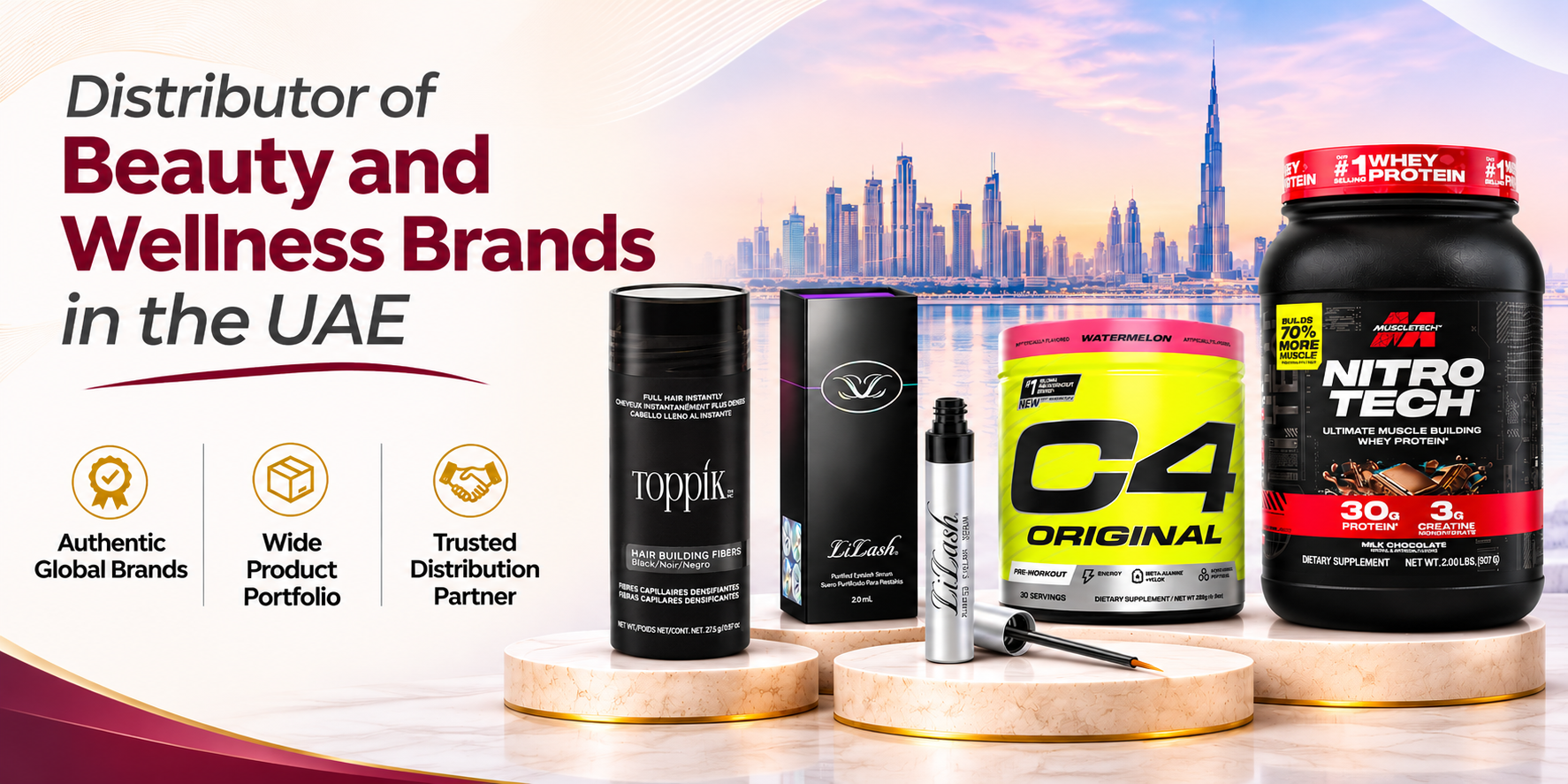
Vivandi Distribution has more than 24 years in business and works with over 20 brand partners across the UAE and GCC, with offices in Dubai and Riyadh. Our portfolio covers nutraceuticals, beauty and haircare, personal care devices and sports supplements, with brands such as Lilash, Toppik, MuscleTech and Cellucor.
If you’re planning to bring a wellness or beauty brand to the UAE, our team can help you assess registration requirements, channel strategy and launch timelines. Become a partner with Vivandi Distribution
Frequently Asked Questions
What is an authorised distributor of wellness brands?
A company with written permission from a brand owner to import, market and sell its wellness products in a defined territory.
Do I need a local distributor to sell wellness products in the UAE?
Not always, but many international brands use one to manage registration, logistics and channel relationships more efficiently than setting up locally.
Which authorities regulate wellness and beauty products in the UAE?
It depends on the product type and emirate. Authorities can include MOHAP, Dubai Municipality, ADAFSA and MoIAT. Always confirm current requirements before importing.
How long does product registration take?
Timelines vary by product category and authority. Ask your distributor for realistic estimates based on similar products.
Should I choose an exclusive or non-exclusive distributor?
Exclusivity can secure stronger commitment but should be tied to clear performance targets and a defined term.
Can a distributor manage my marketplace listings too?
Many do. Confirm whether listing content, SEO, advertising and Arabic localisation are included.